
What is mindfulness?
Mindfulness is the practice of paying attention to what’s happening right now, on purpose, with a gentle, nonjudging attitude. It’s not about “emptying your mind” or forcing calm. It’s about noticing your breath, your body, your thoughts, your feelings, and the small details of your experience as they arise and pass. When the mind drifts (and it will), mindfulness is simply the act of returning, again and again, to the present moment with kindness. Over time, this kind of attention builds steadiness and clarity. It helps you respond rather than react, and it creates a little space around anxiety, self-criticism, or urgency so they don’t have to drive the day.
Mindfulness and art-making
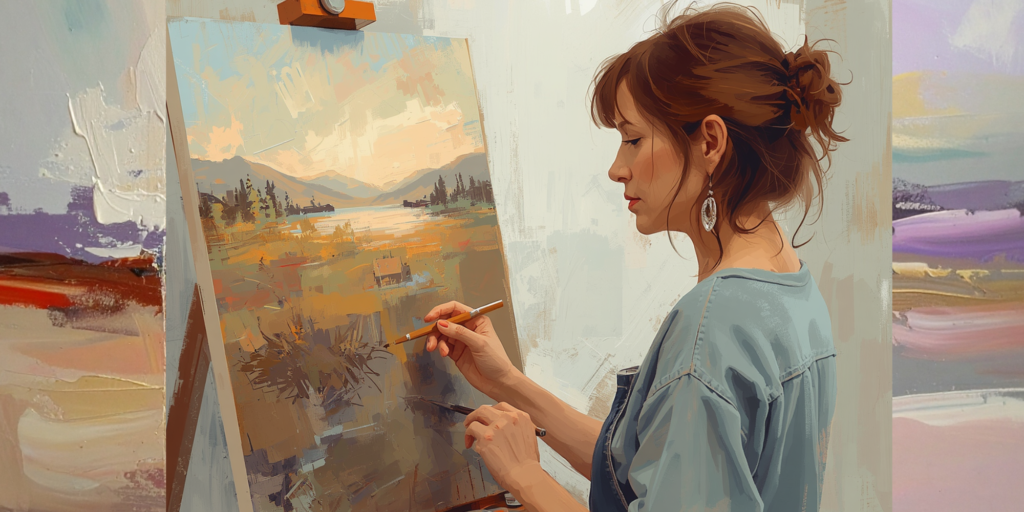
For me as an artist, mindfulness isn’t separate from the creative process, it is the ground of it. The studio becomes a place to slow down and listen to the paper, the light, the edges, the subtle shifts in value and color, the quiet messages in the work itself. I’m not trying to dominate the drawing; I’m trying to meet it. In that slower tempo, I can notice what’s actually there instead of what I think should be there. The careful, layered nature of my process invites presence, one mark, one decision, one breath at a time; until attention turns into intimacy with the subject and the piece begins to reveal its own direction.
Quietness is not a pause before creativity; it’s the doorway into it. When I allow silence, I’m giving my nervous system permission to settle, and I’m giving the work room to speak. That’s where I find nuance: the softness of transitions, the patience required for detail, the humility to revise without shame.
Mindfulness helps me stay close to the process instead of chasing an outcome—close to the act of seeing, the act of making, the act of returning. And in that returning, creativity becomes less like performance and more like a practice: a steady devotion to attention, presence, and the quiet beauty that emerges when I let the work unfold in its own time.